Seasonal exterior invader barrier defense operates on the biological schedule of migratory and overwintering arthropods native to southwest Ohio. In late summer and autumn, dropping ambient temperatures along the Ohio…
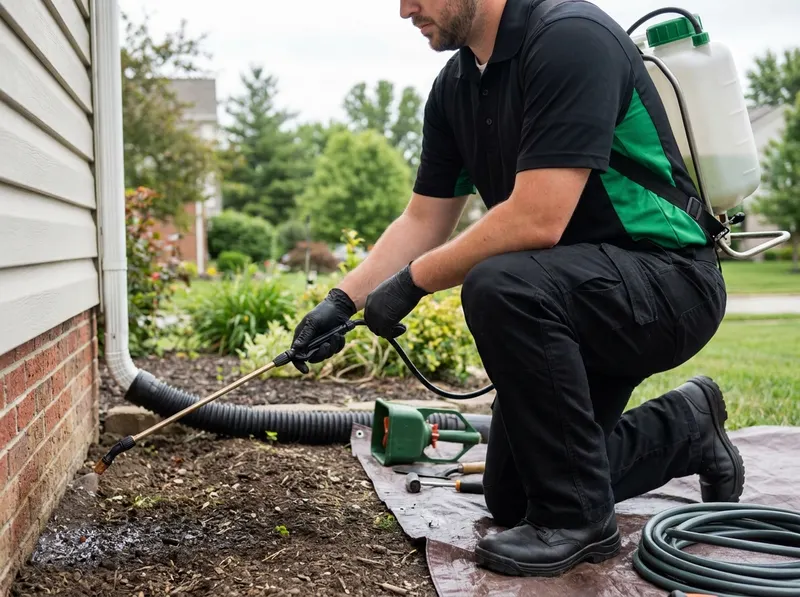
Seasonal exterior invader barrier defense operates on the biological schedule of migratory and overwintering arthropods native to southwest Ohio. In late summer and autumn, dropping ambient temperatures along the Ohio River valley drive pests such as boxelder bugs, western conifer seed bugs, and brown marmorated stink bugs toward the warm thermal mass of residential siding. In neighborhoods like Mount Lookout, Hyde Park, and Oakley, historic wood and composite cladding often feature gaps measuring 0.125 inches or larger around soffits and sill plates. Granular applications coupled with residual water-based microencapsulated suspensions establish an invisible band that disrupts insect nervous systems upon contact, preventing aggregation inside wall voids where pests produce stress odors or emerge into bedrooms during mid-winter warm spells.
Effective structural protection relies on systematic execution rather than broadcast application across non-target surfaces. Granular insecticides are placed in garden mulch and gravel borders, followed by low-pressure mechanical spraying along the foundation masonry. Technicians apply principles established by the United States Environmental Protection Agency to avoid indiscriminate spraying, concentrating instead on active harborage zones. The application adheres to structural guidelines defined by the Ohio Department of Agriculture Pesticide Regulation, maintaining strict setback distances from ornamental plantings and edible gardens. In hillside communities like Mount Adams and Clifton, subterranean runoff patterns and limestone foundation walls require focused targeting of sub-grade expansion joints where crickets and millipedes seek damp refuge during August droughts.
Homeowners selecting barrier defense often evaluate perimeter treatments against interior pesticide applications. While interior fogging treats only the insects already visible on floorboards, it introduces chemical compounds into shared air spaces and fails to address the external population source. Exterior barrier defense prevents the entry event entirely, preserving indoor environmental air quality for toddlers and companion animals. For older brick and mortar architecture common in Northside and Over-the-Rhine, this barrier is reinforced with copper mesh caulking in mortar voids as recommended in the Ohio State University Extension pest management bulletins. Treatment integrity remains stable across UV exposure and intermittent rainfall for approximately 60 to 90 days. Homeowners may reach GraniteHaven Pest Solutions at (513) 812-8076 to review seasonal defense schedules.
Every job gets a firm, written price after an on-site visit.
Tell us about your seasonal exterior invader barrier defense job in Cincinnati and we'll send a clear, written quote, usually the same day.
 GraniteHaven Pest Solutions