Outdoor parasite pressure in Southwestern Ohio intensifies rapidly from April through October. Flea and tick exterior yard suppression in Cincinnati halts the vector transmission of Lyme disease, Rocky Mountain spotted…
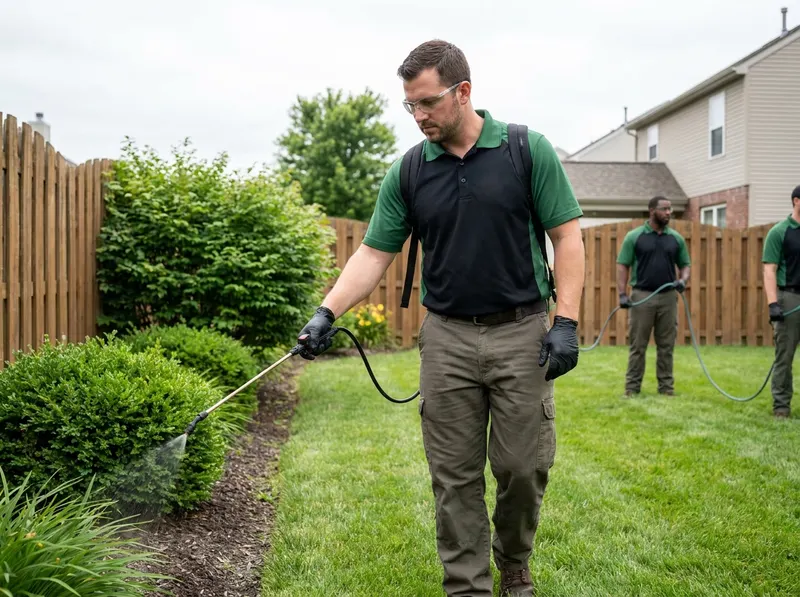
Outdoor parasite pressure in Southwestern Ohio intensifies rapidly from April through October. Flea and tick exterior yard suppression in Cincinnati halts the vector transmission of Lyme disease, Rocky Mountain spotted fever, and flea-borne typhus by neutralising parasites directly in their harborage sites. Yards in Clifton and Northside with mature tree canopies foster damp leaf litter where deer ticks thrive, while open suburban turf in Hyde Park and Mount Lookout frequently harbors cat fleas introduced by urban wildlife such as raccoons and feral cats. Rather than masking the issue with basic retail sprays that break down within 14 days under rain exposure, our technicians deploy structural treatments using professional-grade synthetic pyrethroids combined with an insect growth regulator (IGR) certified under the EPA pesticide program. These materials bind to organic matter, maintaining persistence across 30 to 60 days even through summer downpours along the Ohio River basin.
Effective perimeter suppression requires systematic micro-habitat targeting. In neighborhoods like Mount Adams and College Hill, sloped lots and dense groundcovers such as English ivy or pachysandra create humid microclimates that shelter tick nymphs. The application protocol follows five operational phases:
Choosing exterior suppression over interior-only treatments prevents the traumatic cycle of household flea infestations. Once domestic carpets and upholstery become infested, eradication requires weeks of rigorous vacuuming and chemical intervention. Exterior suppression establishes a sterile buffer zone, isolating the structure. For properties bordering wooded ravines in Pleasant Ridge or urban park spaces near Eden Park, an integrated barrier ensures family safety without exposing indoor cats or toddlers to indoor pesticide broadcasts. We maintain compliance with standards enforced by the Ohio Department of Agriculture, the National Pest Management Association, and worker safety rules from OSHA. Technicians apply formulations rated for low mammal toxicity following American Veterinary Medical Association safety protocols, requiring pets and children to stay off treated turf for two hours until completely dry. For ongoing monitoring, property records align with the Cincinnati Health Department vector surveillance metrics and Hamilton County Public Health advisories.
Every job gets a firm, written price after an on-site visit.
Tell us about your flea and tick exterior yard suppression job in Cincinnati and we'll send a clear, written quote, usually the same day.
 GraniteHaven Pest Solutions